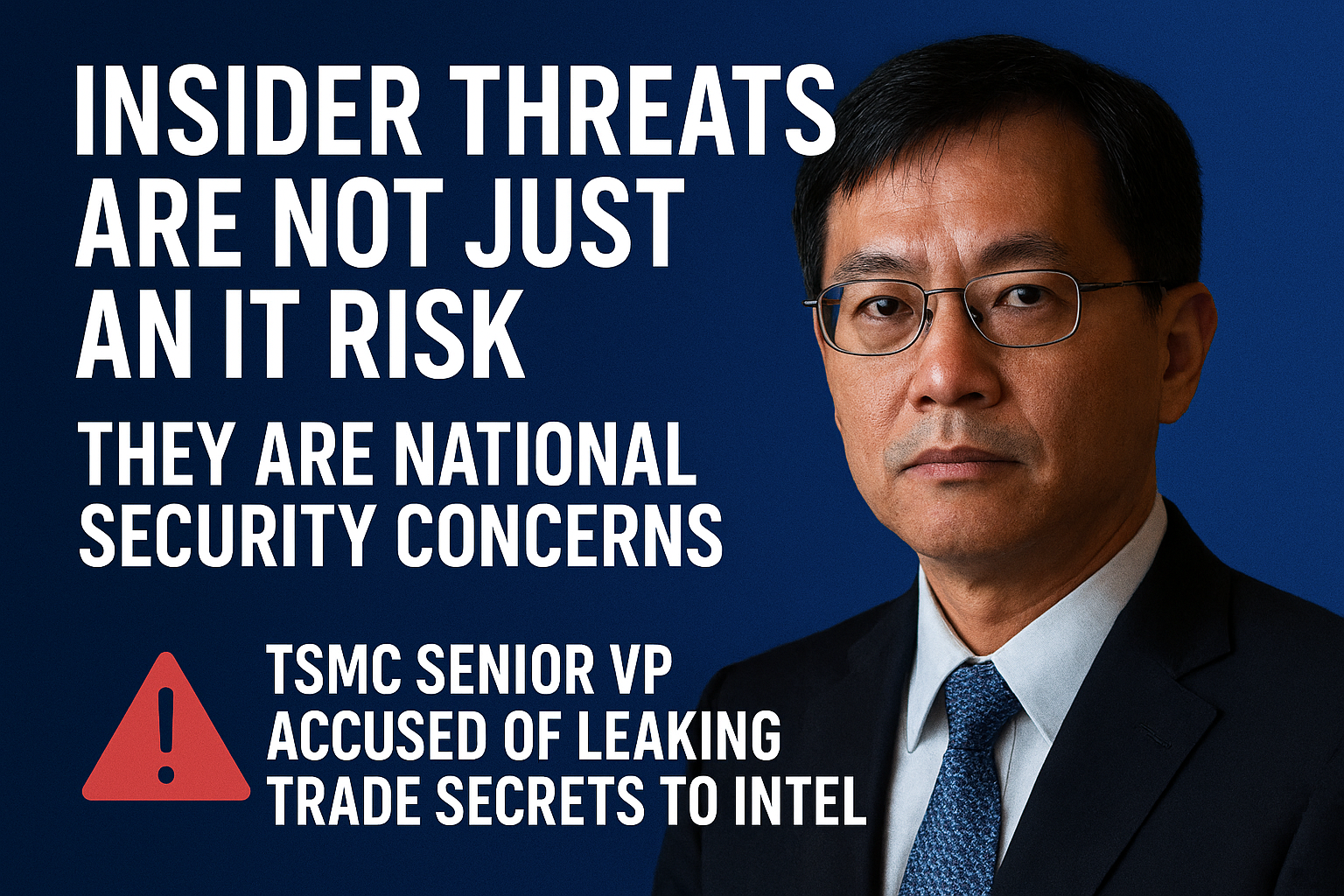
The semiconductor industry is often described as the beating heart of modern technology. Every smartphone, server, and AI accelerator depends on chips that are smaller, faster, and more efficient than the generation before. Behind this progress lies a fierce competition between companies like Taiwan Semiconductor Manufacturing Company (TSMC) and Intel. That rivalry has now escalated into a legal and national security battle centered on one man: Wei-Jen Lo, a former Senior Vice President at TSMC who joined Intel in late 2025.
TSMC alleges that Lo leaked or transferred trade secrets to Intel. Intel denies the claims. Prosecutors in Taiwan have launched an investigation under the National Security Act. The case is still unfolding, but its implications stretch far beyond one executive’s career.
Who is Wei-Jen Lo
Wei-Jen Lo is a veteran of the semiconductor world. He spent 18 years at Intel before moving to TSMC in 2004. At TSMC, he rose to Senior Vice President of Research and Development, a role that placed him at the center of the company’s most critical breakthroughs.
Lo’s leadership was instrumental in developing 5nm, 3nm, and 2nm process technologies, the cutting-edge nodes that define TSMC’s dominance. These processes are not just technical milestones. They are strategic assets that underpin global supply chains, power the latest iPhones, and enable AI workloads at hyperscale data centers.
After more than two decades at TSMC, Lo retired in July 2025. Just three months later, he reappeared at Intel as Executive Vice President, reporting directly to CEO Lip-Bu Tan.
The Allegations
TSMC claims that Lo violated his non-disclosure and non-compete agreements. During his exit interview, he allegedly told TSMC he planned to join an academic institution, not Intel. Yet by October 2025, he was in a senior role at Intel.
The lawsuit alleges that Lo continued to request information from TSMC’s R&D teams even after being reassigned to corporate strategy in 2024. Prosecutors believe he may have taken data related to A16 and A14 nodes, which represent TSMC’s next-generation processes.
Taiwanese authorities raided Lo’s homes, seizing computers and storage devices. The investigation is being treated as a national security matter, not just a corporate dispute.
Intel’s Response
Intel has strongly denied the allegations. CEO Lip-Bu Tan told employees there was “no merit” to the claims. Intel emphasized that it has strict policies prohibiting the use of third-party confidential information.
Intel framed Lo’s hiring as part of normal talent mobility, calling it “common and healthy” for the industry. The company insists that it respects intellectual property rights and that Lo’s expertise is being applied within legal boundaries.
Why This Case Matters
This case is not just about one executive. It is about the fragile balance between talent mobility and trade secret protection. In an industry where executives often move between rivals, the line between experience and proprietary knowledge is razor-thin.
For Taiwan, the stakes are even higher. TSMC is not just a company. It is a national asset. Its dominance in advanced chip manufacturing is central to Taiwan’s economy and geopolitical leverage. If Lo did transfer sensitive knowledge, it could accelerate Intel’s efforts to close the gap with TSMC, reshaping the competitive landscape.
Market Reaction
The lawsuit immediately impacted TSMC’s stock, which fell more than 3 percent after the announcement. Investors are watching closely, aware that the outcome could influence not only corporate fortunes but also global supply chains.
The Bigger Picture
The semiconductor industry is entering a new era defined by AI workloads, geopolitical competition, and national security concerns. Chips are no longer just commercial products. They are strategic assets.
The Lo case highlights how vulnerable companies are to insider risks. It also underscores the importance of legal frameworks, government oversight, and corporate governance in protecting intellectual property.
Closing Thoughts
The Wei-Jen Lo case is still unfolding. Prosecutors have not filed criminal charges, but the investigation continues. For now, TSMC is pursuing civil remedies, while Intel stands by its new hire.
Whatever the outcome, this case will be remembered as a turning point. It shows that in the semiconductor industry, the movement of one executive can trigger lawsuits, government investigations, and stock market tremors. It also reminds us that the race for smaller, faster, and more efficient chips is not just about technology. It is about power, security, and the future of global innovation.